
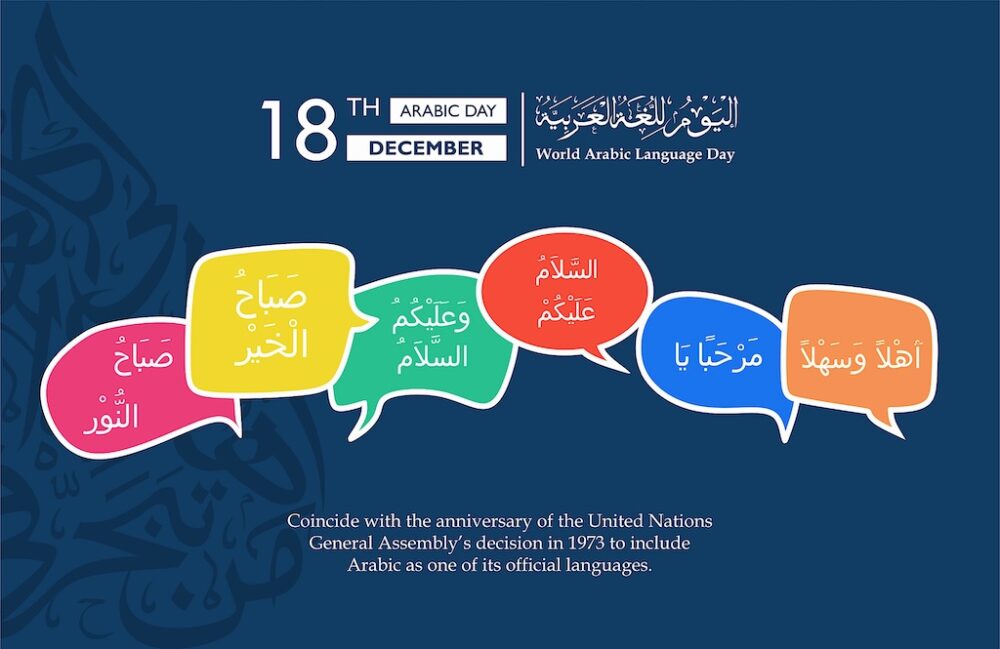
The World Arabic Language Day is not just a passing occasion; rather, it represents a central event to highlight the importance of the Arabic language and its position among the world’s languages. It is celebrated every year on December 18, based on a resolution adopted by the United Nations General Assembly in 1973, when Arabic was recognized as one of the official languages of the organization, acknowledging its significant cultural and civilizational role.
Arabic is characterized by its immense linguistic richness, with unique structures and vocabulary, and it possesses an exceptional ability to express the most precise and profound meanings. Moreover, throughout history, Arabic has been the language of literature, poetry, and art, in addition to being the language of the Qur’an, which grants it a special spiritual status for more than one and a half billion Muslims worldwide.
Today, Arabic is considered one of the most widely spoken languages, with over 400 million speakers in nearly forty countries. Beyond its geographical spread, Arabic played a pivotal role in transmitting sciences, philosophy, and knowledge to Europe during the Middle Ages, making it a bridge for cultural interaction between East and West.
On World Arabic Language Day, diverse activities are organized, including academic seminars, discussion panels, literary and linguistic competitions, and book and calligraphy exhibitions. Schools and universities also dedicate activities that strengthen students’ appreciation of the beauty and power of the Arabic language.
Nevertheless, Arabic faces many challenges today, such as the decline of its use in scientific and technical fields, the increasing presence of foreign languages among youth, and the urgent need to develop teaching methods that suit modern requirements. Thus, enhancing Arabic education and encouraging research in the language remain key responsibilities for the current generation.
In conclusion, Arabic is more than just a means of communication; it is a profound identity, a rich civilization, and a history that must be preserved. Just as nations are measured by the strength of their languages, Arabic remains a cornerstone of the strength and cultural identity of the Arab nation.
لَا يُعَدُّ اليَوْمُ العَالَمِيُّ لِلُّغَةِ العَرَبِيَّةِ ذِكْرَى عَابِرَةً، بَلْ يُمَثِّلُ مُنَاسَبَةً مَرْكَزِيَّةً لِتَسْلِيطِ الضَّوْءِ عَلَى أَهَمِّيَّةِ اللُّغَةِ العَرَبِيَّةِ وَمَكَانَتِهَا بَيْنَ لُغَاتِ العَالَمِ. يُحْتَفَلُ بِهَذَا اليَوْمِ فِي الثَّامِنِ عَشَرَ مِنْ دِيسَمْبَرَ مِنْ كُلِّ عَامٍ، اسْتِنَادًا إِلَى قَرَارِ الجَمْعِيَّةِ العَامَّةِ لِلْأُمَمِ المُتَّحِدَةِ عَامَ ٣٧٩١، حِينَ تَمَّ اعْتِمَادُ العَرَبِيَّةِ ضِمْنَ اللُّغَاتِ الرَّسْمِيَّةِ لِلْمُنَظَّمَةِ، اعْتِرَافًا بِدَوْرِهَا الحَضَارِيِّ وَالثَّقَافِيِّ المُؤَثِّرِ.
تَتَّسِمُ اللُّغَةُ العَرَبِيَّةُ بِثَرَاءٍ لُغَوِيٍّ هَائِلٍ، فَهِيَ لُغَةٌ تَنْفَرِدُ بِتَرَاكِيبِهَا وَمُفْرَدَاتِهَا، وَتَمْلِكُ قُدْرَةً اسْتِثْنَائِيَّةً عَلَى التَّعْبِيرِ عَنْ أَدَقِّ المَعَانِي وَأَعْمَقِهَا. وَلَيْسَ ذَلِكَ فَقَطْ، بَلْ كَانَتِ العَرَبِيَّةُ عَبْرَ العُصُورِ لُغَةَ الأَدَبِ وَالشِّعْرِ وَالفَنِّ، وَارْتَبَطَتْ بِالقُرْآنِ الكَرِيمِ، مِمَّا أَضْفَى عَلَيْهَا مَكَانَةً رُوحِيَّةً خَاصَّةً لَدَى أَكْثَرَ مِنْ مِلْيَارٍ وَنِصْفٍ مِنَ المُسْلِمِينَ حَوْلَ العَالَمِ.
اليَوْمَ، تُعَدُّ العَرَبِيَّةُ مِنْ أَكْثَرِ اللُّغَاتِ انْتِشَارًا فِي العَالَمِ، إِذْ يَتَحَدَّثُ بِهَا مَا يَزِيدُ عَلَى أَرْبَعِمِئَةِ مِلْيُونِ شَخْصٍ فِي نَحْوِ أَرْبَعِينَ دَوْلَةً. وَإِلَى جَانِبِ انْتِشَارِهَا الجُغْرَافِيِّ، كَانَ لِلُّغَةِ العَرَبِيَّةِ دَوْرٌ مَحُورِيٌّ فِي نَقْلِ العُلُومِ وَالفَلْسَفَةِ وَالمَعَارِفِ إِلَى أُورُوبَّا أَيَّامَ العُصُورِ الوُسْطَى، مِمَّا جَعَلَهَا جِسْرًا لِلتَّوَاصُلِ الحَضَارِيِّ بَيْنَ الشَّرْقِ وَالغَرْبِ.
وَفِي اليَوْمِ العَالَمِيِّ لِلُّغَةِ العَرَبِيَّةِ، تُنَظَّمُ فَعَالِيَّاتٌ مُتَنَوِّعَةٌ تَشْمَلُ النَّدَوَاتِ الأَكَادِيمِيَّةَ، وَالحَلَقَاتِ النِّقَاشِيَّةَ، وَالمُسَابَقَاتِ الأَدَبِيَّةَ وَاللُّغَوِيَّةَ، وَمَعَارِضَ الكُتُبِ وَالخَطِّ العَرَبِيِّ. كَمَا تُخَصِّصُ المَدَارِسُ وَالجَامِعَاتُ أَنْشِطَةً تُعَزِّزُ تَقْدِيرَ الطُّلَّابِ لِجَمَالِيَّةِ اللُّغَةِ وَقُوَّتِهَا.
وَمَعَ ذَلِكَ، تُوَاجِهُ العَرَبِيَّةُ اليَوْمَ تَحَدِّيَاتٍ كَثِيرَةً، مِنْهَا تَرَاجُعُ اسْتِخْدَامِهَا فِي المَجَالَاتِ العِلْمِيَّةِ وَالتِّقْنِيَّةِ، وَتَزَايُدُ حُضُورِ اللُّغَاتِ الأَجْنَبِيَّةِ بَيْنَ الشَّبَابِ، فَضْلًا عَنِ الحَاجَةِ المُلِحَّةِ لِتَطْوِيرِ مَنَاهِجِ تَعْلِيمِ العَرَبِيَّةِ بِمَا يَتَنَاسَبُ مَعَ مُتَطَلَّبَاتِ العَصْرِ الحَدِيثِ. لِذَا، يَبْقَى تَعْزِيزُ تَعْلِيمِ العَرَبِيَّةِ وَتَشْجِيعُ البَحْثِ العِلْمِيِّ فِيهَا مِنْ أَهَمِّ مَهَامِّ الجِيلِ الحَالِيِّ.
فِي الخِتَامِ، تَبْقَى العَرَبِيَّةُ أَكْثَرَ مِنْ مُجَرَّدِ وَسِيلَةٍ لِلتَّوَاصُلِ؛ إِنَّهَا هُوِيَّةٌ عَمِيقَةٌ وَحَضَارَةٌ عَرِيقَةٌ وَتَارِيخٌ يَنْبَغِي صَوْنُهُ. فَكَمَا تُقَاسُ الأُمَمُ بِقُوَّةِ لُغَاتِهَا، تَبْقَى اللُّغَةُ العَرَبِيَّةُ رَكِيزَةً أَسَاسِيَّةً فِي قُوَّةِ الأُمَّةِ وَهُوِيَّتِهَا الثَّقَافِيَّةِ.
https://forms.gle/LzuQgBqBekXPfyii8 اختبر نفسك
Test yourself https://forms.gle/Cmzt2P596GLy7A9s9