
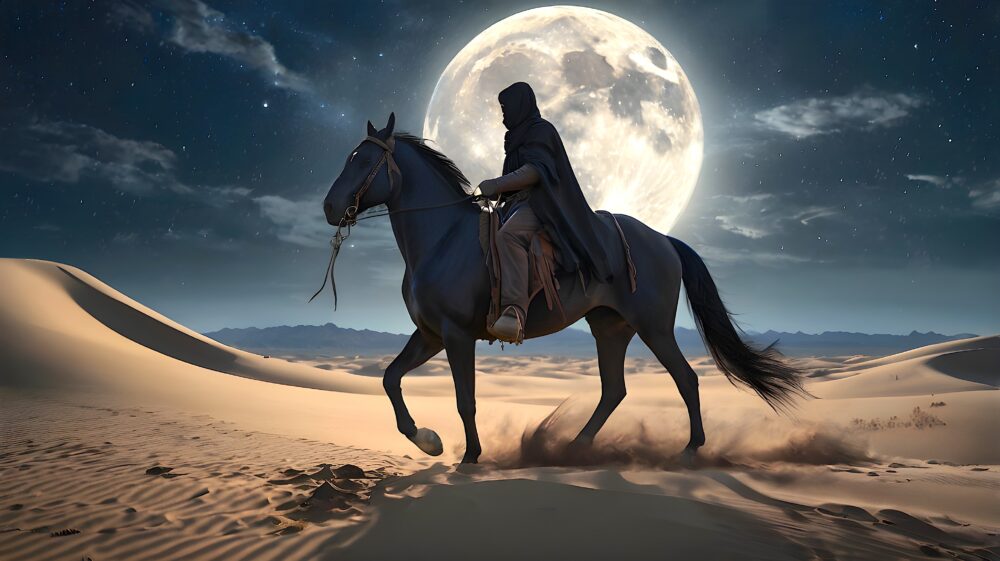
إِذا كانَ أَمرُ اللَهِ أَمراً يُقَدَّرُ
فَكَيفَ يَفِرُّ المَرءُ مِنهُ وَيَحذَرُ
If God’s decree is a fate already determined,
then how can a man flee from it or guard himself against it?
وَمَن ذا يَرُدُّ المَوتَ أَو يَدفَعُ القَضا
وَضَربَتُهُ مَحتومَةٌ لَيسَ تَعثَرُ
And who can repel death or push back what is ordained?
Its blow is inevitable, never stumbling or failing.
لَقَد هانَ عِندي الدَهرُ لَمّا عَرَفتُهُ
وَإِنّي بِما تَأتي المُلِمّاتُ أَخبَرُ
Time has grown insignificant to me since I came to know its nature.
And I am well acquainted with the calamities that it brings.
وَلَيسَ سِباعُ البَرِّ مِثلَ ضِباعِهِ
وَلا كُلُّ مَن خاضَ العِجاجَةَ عَنتَرُ
The beasts of the wild are not like its scavenging hyenas.
Nor is everyone who plunges into the dust of battle another Antarah.
سَلوا صَرفَ هَذا الدَهرِ كَم شَنَّ غارَةً
فَفَرَّجتُها وَالمَوتُ فيها مُشَمِّرُ
Ask the turns of this age how many raids it unleashed,
that I dispelled while death stood ready within them.
بِصارِمِ عَزمٍ لَو ضَرَبتُ بِحَدِّهِ
دُجى اللَيلِ وَلّى وَهوَ بِالنَجمِ يَعثَرُ
With a sharp resolve whose edge, if I struck with it
the darkness of night would vanish, stumbling over the stars.
دَعوني أَجُدَّ السَعيَ في طالَبِ العُلا
فَأُدرِكَ سُؤلي أَو أَموتَ فَأُعذَرُ
Let me strive earnestly in seeking high honor,
so I attain my desire, or die and thus be excused.
وَلا تَختَشوا مِمّا يُقَدَّرُ في غَدٍ
فَما جاءَنا مِن عالَمِ الغَيبِ مُخبِرُ
Do not be timid about what is decreed for tomorrow,
for no messenger has come to us from the unseen world to inform us.
وَكَم مِن نَذيرٍ قَد أَتانا مُحَذِّراً
فَكانَ رَسولاً بِالسُرورِ يُبَشِّرُ
How many a warner has come to us with warnings,
yet turned out to be a messenger bringing tidings of joy.
قِفي وَاِنظُري يا عَبلَ فِعلي وَعايِني
طِعاني إِذا ثارَ العَجاجُ المُكَدَّرُ
Stand, O ‘Abla, and look at my deeds; witness them with your own eyes,
my thrusting in battle when the dark dust of war is stirred.
تَري بَطَلاً يُلقي الفَوارِسَ ضاحِكاً
وَيَرجِعُ عَنهُم وَهوَ أَشعَثُ أَغبَرُ
You will see a hero who fells knights while laughing,
and returns from them disheveled and dust-covered.
وَلا يَنثَني حَتّى يُخَلّي جَماجِماً
تَمُرُّ بِها ريحُ الجُنوبِ فَتَصفِرُ
He does not retreat until he has left skulls behind
through which the south wind passes, whistling as it blows.
وَأَجسادَ قَومٍ يَسكُنُ الطَيرُ حَولَها
إِلى أَن يَرى وَحشَ الفَلاةِ فَيَنفِرُ
And bodies of men around which birds settle,
until the beasts of the wilderness see them and are startled away.
Antarah ibn Shaddad al‑‘Absi was a pre‑Islamic Arab poet and warrior, belonging to the Abs tribe in central Arabia, and it is thought that he lived in the sixth century CE before Islam. He was known from his youth for his strength and prowess in battle and for his skill in horsemanship, until he became one of the most famous Arab knights of his time. He was born to a father from the nobles of Abs (Shaddad) and an Ethiopian bondwoman named Zubaybah, so at the beginning of his life he suffered contempt because of his skin colour and because he was the son of a slave‑woman; then he won his father’s acknowledgment of his lineage after he distinguished himself in wars and defended his people. His name became linked to the story of his love for his cousin ‘Abla, who became a symbol of chaste love in Arab heritage, and it was also associated with the war of Dahis and al‑Ghabra and other episodes of chivalry. Antarah’s poetry is considered among the most powerful verse of pride and martial enthusiasm in the pre‑Islamic era, including his famous Mu‘allaqa, which combines love poetry addressed to ‘Abla with self‑glorification, descriptions of chivalry, and images of heroism and combat. This poem is one of Antarah’s odes of pride and martial ardour; he opens it by affirming that God’s decree is effective and written, and that death cannot be repelled or fled from, thus providing a fatalistic background for the courage in battle that he goes on to describe.
عَنتَرَةُ بنُ شَدَّادٍ العَبسِيُّ شَاعِرٌ وَفَارِسٌ عَرَبِيٌّ جَاهِلِيٌّ، يَنتَمِي إِلَى قَبِيلَةِ عَبسٍ فِي وَسَطِ الجَزِيرَةِ العَرَبِيَّةِ، وَيُرَجَّحُ أَنَّهُ عَاشَ فِي القَرۡنِ السَّادِسِ المِيلَادِيِّ قَبلَ الإِسلَامِ. عُرِفَ مُنذُ صِغَرِهِ بِقُوَّةِ بأسِهِ فِي القِتَالِ، وَبِمَهَارَتِهِ فِي الفُرُوسِيَّةِ، حَتَّى صَارَ مِنۡ أَشهَرِ فُرۡسَانِ العَرَبِ فِي عَصرِهِ. وُلِدَ لِأَبٍ مِنۡ سَادَاتِ عَبسٍ (شَدَّادٍ) وَأُمٍّ حَبَشِيَّةٍ أَمَةٍ تُدۡعَى زُبَيبَةَ، فَكَانَ يُعَانِي فِي بَدَايَةِ حَيَاتِهِ مِنَ الِاحتِقَارِ بِسَبَبِ لَوۡنِ بَشَرَتِهِ وَكَوۡنِهِ ابنَ أَمَةٍ، ثُمَّ انتَزَعَ اعتِرَافَ أَبِيهِ بِنَسَبِهِ بَعدَ أَنۡ بَرَزَ فِي الحُرُوبِ وَحَمَى قَوۡمَهُ. ارۡتَبَطَ اسمُهُ بِقِصَّةِ حُبِّهِ لِابنَةِ عَمِّهِ عَبلَةَ، الَّتِي صَارَتۡ رَمزًا لِلحُبِّ العُذۡرِيِّ فِي التُّرَاثِ العَرَبِيِّ، كَمَا ارۡتَبَطَ اسمُهُ بِحَرۡبِ دَاحِسٍ وَالغَبرَاءِ وَغَيرِهَا مِنۡ وُقُوعَاتِ الفُرُوسِيَّة. يُعَدُّ شِعرُ عَنتَرَةَ مِنۡ أَجزَلِ شِعرِ الفَخرِ وَالحَمَاسَةِ فِي الجَاهِلِيَّةِ، وَمِنهُ مُعَلَّقَتُهُ المَشهُورَةُ الَّتِي تَجمَعُ بَينَ الغَزَلِ بِعَبلَةَ، وَالفَخرِ بِالنَّفسِ، وَوَصفِ الفُرُوسِيَّةِ، وَصُوَرِ البُطُولَةِ وَالقِتَالِ. هٰذِهِ القَصِيدَةُ مِنۡ قَصَائِدِ الفخرِ وَالحَمَاسَةِ عِندَ عَنتَرَةَ، يَفتَتِحُهَا بِالتَّسلِيمِ بِأَنَّ أَمرَ اللَّهِ نَافِذٌ مَكتُوبٌ، وَأَنَّ المَوۡتَ لَا يُمكِنُ دَفعُهُ أَوِ الفِرَارُ مِنهُ، فَيَضَعُ خَلفِيَّةً قَدَرِيَّةً لِمَا سَيَذۡكُرُهُ مِنۡ شَجَاعَةٍ فِي الحَرۡبِ.
2 thoughts on “Arabic Poets: Antarah ibn Shaddad al‑‘Absi – عنترة ابن شداد العبسي”
Awesome poetry and translation
Awesome poetry and translation, great job.